
Key Insights from Stratence Partners at EPA Amsterdam 2026. From Pricing Complexity to AI Driven Commercial Decisions.

At the Evidence, Pricing & Access (EPA) Conference in Amsterdam on March 3rd, 2026, Fernando Ventureira, CEO of Stratence Partners, delivered two consecutive sessions addressing one of the most pressing challenges for pharmaceutical and MedTech organizations today: how to transform commercial complexity into structured, profitable decision-making.
The sessions covered two complementary themes.
Gross‑to‑Net management as the economic backbone of pricing and access decisions
AI‑driven commercial transformation as the enabler of faster, more confident executive decisions
Together, these topics illustrate a central idea: commercial performance in healthcare markets is no longer a function of isolated pricing tactics or technology initiatives. It requires a fully integrated commercial decision system where strategy, pricing, market access, and execution operate as one.
Session 1 – Gross‑to‑Net, Reimagined
Turning Pricing Complexity into Sustainable Revenue
In pharmaceutical and MedTech markets, the difference between list price and net price is no longer a technical accounting matter. It has become a strategic management challenge.
Increasing pricing pressure, complex rebate structures, tender environments, and payer negotiations have created pricing waterfalls that are difficult to understand, monitor, and control.
Many organizations still operate with limited visibility across their Gross‑to‑Net structure. They may identify margin leakages after they occur, but very few organizations can actively manage every lever in advance.
The session highlighted three critical capabilities required to transform Gross‑to‑Net from a reporting exercise into a competitive advantage.
1. End‑to‑End Gross‑to‑Net Transparency
The starting point is full transparency across the entire pricing waterfall.
Organizations must understand how each component — list price, discounts, rebates, incentives, cost‑to‑serve, and contractual conditions — impacts the final net revenue.
Without this visibility, commercial negotiations often happen in isolation, with limited understanding of the cumulative economic impact.
When properly structured, Gross‑to‑Net analysis becomes a strategic capability that reveals where margin is lost, where pricing power exists, and which levers can sustainably improve profitability.
2. Scenario‑Based Pricing and Contracting Decisions
Once transparency is achieved, organizations can move from static reporting to forward‑looking decision simulations.
Executive teams must be able to evaluate trade‑offs between three core dimensions:
Market access
Market share
Profitability
Scenario simulations allow decision‑makers to understand how adjustments in price corridors, rebate structures, or contract conditions influence commercial outcomes before agreements are finalized.
This capability transforms pricing governance from reactive control into proactive strategic steering.
3. Integrated Cross‑Functional Governance
Gross‑to‑Net performance cannot be managed by pricing teams alone.
Effective organizations align three major decision domains:
Market Access – payer agreements and reimbursement structures
Pricing – list price positioning, corridors, and discount policies
Commercial Execution – negotiation practices and incentive alignment
When these functions operate within a shared governance framework, organizations gain consistency, discipline, and auditability in commercial decisions.
Gross‑to‑Net then becomes a managed economic system rather than a reconciliation exercise.
Session 2 – AI‑Driven Commercial Transformation
From Insight to Impact in Pharma
While data and analytics have long been present in pharmaceutical organizations, the challenge is rarely technology itself.
The real challenge is transforming fragmented data into structured decision confidence.
The second session addressed how artificial intelligence can support commercial transformation when it is embedded in business decisions rather than treated as a standalone digital initiative.
AI as a Decision Enabler
Artificial intelligence creates value only when it is integrated into strategic, pricing, access, and execution decisions.
When properly embedded, AI can support executive teams in several critical areas:
Strategic decisions
Portfolio resilience under patent expiry and generic entry
Investment allocation across therapeutic areas
Launch sequencing and cannibalization scenarios
Access decisions
Reimbursement pathway simulations
Coverage and patient eligibility analysis
Net price versus access trade‑off modeling
Pricing decisions
Discount and rebate structure optimization
Tender bid simulations
Net price erosion forecasting
Execution decisions
Account‑level profitability prioritization
Resource allocation by segment elasticity
Commercial offer configuration for negotiations
In this model, AI does not replace decision‑makers. Instead, it enhances the quality, speed, and reliability of commercial decisions.
From Fragmented Data to Decision Confidence
Most organizations operate with fragmented commercial data environments: ERP systems, CRM tools, tender databases, rebate agreements, market intelligence, and field inputs all exist in parallel.
The key step toward AI‑enabled decision making is creating a structured commercial data model that integrates products, customers, channels, and pricing conditions.
Once this foundation is established, organizations can generate reliable outputs such as:
Margin and share outlook simulations
Tender trade‑off analysis
Pricing consistency checks
Account opportunity ranking
The objective is not more dashboards, but higher confidence in strategic and commercial decisions.
Embedding AI into Commercial Ways of Working
For transformation to be sustainable, AI must be embedded into daily commercial processes.
This includes:
Pricing review forums
Tender committees
Portfolio strategy sessions
Account planning cycles
When AI becomes part of the operating cadence of commercial teams, it shifts from a technical tool to a strategic capability.
Governance and Economic Accountability
Sustained impact requires governance.
Each AI use case must be linked to a clear economic objective, such as margin improvement, market share growth, or working capital optimization.
Decision ownership, escalation rules, and monitoring metrics must be clearly defined so that AI‑supported decisions remain aligned with corporate strategy and compliance requirements.
A Unified Perspective: Commercial Transformation
Taken together, the two sessions highlight a broader message.
Pharmaceutical and MedTech organizations must move beyond isolated pricing initiatives or experimental AI projects.
The real opportunity lies in building a fully integrated commercial transformation framework where:
Strategy defines direction
Pricing governs economic discipline
Commercial execution delivers value in the field
Data and AI strengthen decision quality
When these elements are aligned, organizations can turn complexity into a competitive advantage.
About the Speaker
Fernando Ventureira is the CEO of Stratence Partners and brings more than 35 years of international experience advising CEOs and executive committees on large‑scale commercial transformation programs.
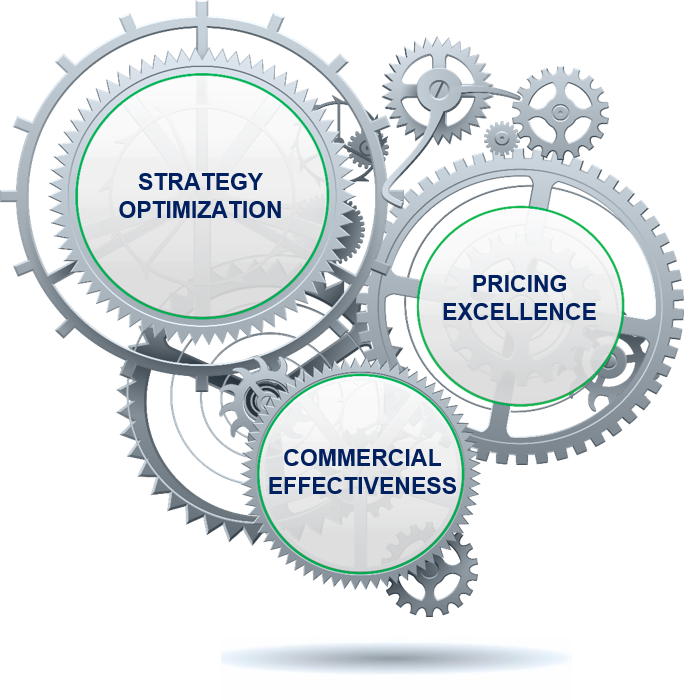
His work focuses on strategy optimization, pricing excellence, and commercial effectiveness, supported by pragmatic AI‑powered solutions for data management, data science, and commercial execution systems.
Stratence Partners supports organizations worldwide in transforming commercial performance through integrated frameworks that align strategy, pricing, and execution into a single system of decision and impact.
This article summarizes the key insights shared during the EPA Amsterdam 2026 conference sessions delivered by Fernando Ventureira.


Comments