
Strategic & Governance Alignment: The Foundation of AI-Powered Commercial Transformation
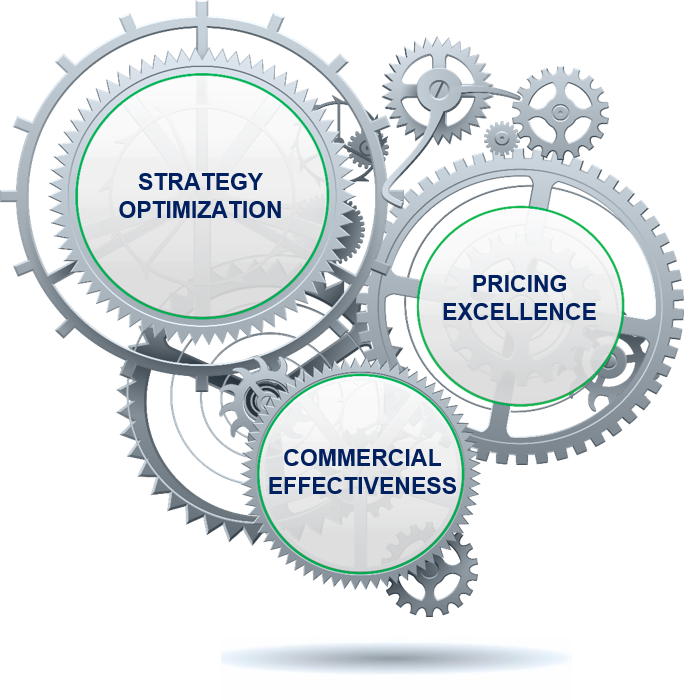

Organizations often invest in analytics, tools and isolated initiatives, yet results remain inconsistent. The reason is structural: strategy, pricing and commercial execution are not truly aligned.
The first pillar of SPIE+AI™ -Strategic & Governance Alignment- provides the foundation for consistent, scalable and measurable commercial performance across the entire organization.
Why Strategic & Governance Alignment Matters
In most companies, strategic priorities are clear on paper, but the way teams make decisions does not always reflect them. Different business units use different rules, countries operate with different logic, and teams interpret value in different ways.The result is predictable: inconsistent pricing, fragmented execution, and a weak link between strategy and P&L impact.
SPIE+AI™ addresses this gap with a unified governance system that aligns goals, processes and decision logic from headquarters to frontline teams — without requiring any software.
The SPIE+AI™ Governance Model
The Governance pillar integrates:
Strategic Priorities and Business Rules Clear connection between business strategy, value logic, pricing rules and decision guardrails.
A Unified Structure Across HQ, Business Units and Countries A consistent operating logic that allows teams worldwide to work with the same frameworks while adapting to local market dynamics.
Transparency and Decision Ownership Roles, responsibilities and accountabilities that ensure decisions are made with clarity and traceability.
Adoption, Change Management and Ways of Working Governance routines, communication flows and leadership alignment to sustain transformation over time.
All of this makes SPIE+AI™ a system, not a tool.
Not software.
A structured approach that makes strategy operational and actionable every day.
How AI Strengthens Governance
AI plays a crucial role — not as a standalone technology, but as an enabler of smarter governance:
Identifies inconsistencies across markets
Highlights deviations from strategic priorities
Simulates scenarios based on rules and constraints
Alerts teams when decisions break the governance model
Helps define value, segmentation and price ranges with logic
Accelerates leadership alignment with real-time insights
AI does not replace governance; it reinforces it.
Impact on Commercial Performance
Organizations applying this first pillar typically achieve:
More predictable margin outcomes
Faster and clearer decision-making across teams
Stronger coordination between HQ and local markets
Fewer internal conflicts and escalations
Improved customer experience through consistent logic
Greater adoption of pricing and commercial policies
Strategic & Governance Alignment is the starting point for any serious Commercial Transformation program.
Case Example
A multinational industrial manufacturer operating across 40+ countries.
Situation:
Markets were working with different pricing rules, different thresholds and different definitions of value. Leadership lacked visibility and escalation routines were reactive.
SPIE+AI™ Intervention:
Defined a unified governance model across HQ, regions and countries
Implemented consistent pricing logic and value frameworks
Established decision rights, thresholds and approval routes
Introduced AI-based scenario evaluation and guardrail control
Enabled monthly governance routines and cross-functional alignment
Results:
+4.8% EBIT improvement in 12 months
30% reduction in pricing escalations
Global visibility of decisions
Faster approvals and consistent execution
This is what Strategic & Governance Alignment enables.
Conclusion
The first pillar of SPIE+AI™ provides the structural foundation on which all other pillars grow.
Without a unified governance model, AI, tools and initiatives remain fragmented.With it, organizations create a strong, scalable and sustainable operating backbone for commercial success.

Comments