
Chemical Industry: Turning Volatility into Commercial Advantage
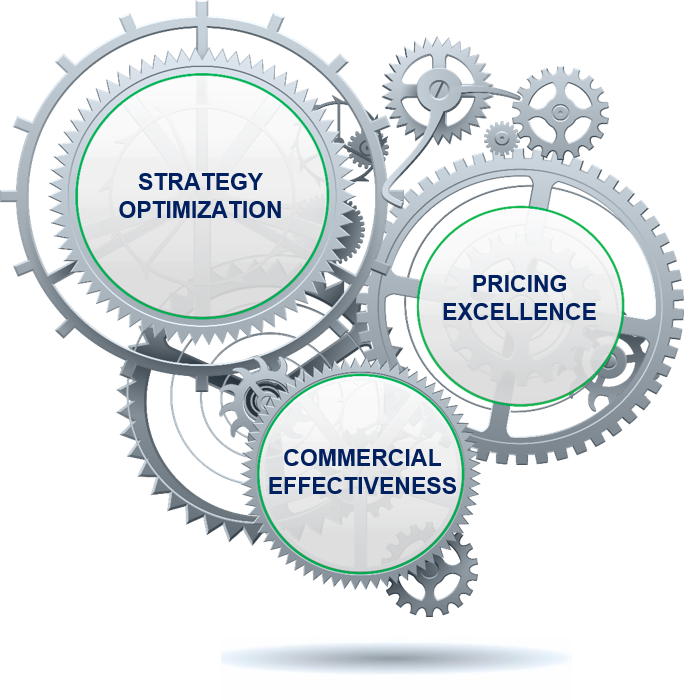

The chemical industry is navigating one of its most complex commercial environments in decades. Volatile raw material prices, energy cost pressure, regulatory tightening and fragmented demand are forcing chemical companies to rethink how they compete, price and grow.
Traditional cost-plus models are no longer sufficient. Margin erosion, inconsistent pricing discipline and limited visibility across regions and segments are common challenges, even among global players.
At the same time, opportunities clearly exist for those able to combine strategic clarity, pricing excellence and disciplined commercial execution.
Key commercial challenges in the Chemical industry
High exposure to input cost volatility and delayed price pass-through
Fragmented pricing governance across regions and product lines
Limited differentiation in commoditized segments
Poor transparency on deal profitability and customer value capture
Sales teams overloaded with complexity and exceptions
Where leading Chemical companies are creating advantage
The most resilient players are shifting from reactive pricing to structured commercial transformation, focusing on:
Value-based pricing beyond commodities Even in highly competitive segments, customers value reliability, supply security, formulation expertise and service. Translating these into structured price corridors is critical.
Integrated commercial governance Strategy, Pricing, Sales and Finance must operate as one system, not as disconnected silos. Clear decision rights and escalation rules are essential.
Data-driven execution at scale Advanced analytics and AI-enabled tools allow chemical companies to manage thousands of SKUs, customers and contracts with consistency and speed.
Self-funded transformation models Quick commercial wins can finance longer-term capabilities, avoiding large upfront investments and minimizing organizational resistance.
A disciplined path forward
Commercial excellence in the chemical industry is no longer about isolated pricing projects. It requires a unified framework combining strategy, pricing, governance and execution, supported by technology and senior expertise.
Companies that move decisively are not just protecting margins, they are creating sustainable competitive advantage in an increasingly volatile market.


Comments