
The Real Deliverable Is Not Dependency. It's Autonomy.

The real test of Commercial Transformation is what happens after the consultants leave.
Organizations invest significant resources in new strategies, pricing models, commercial processes, technology platforms, and increasingly sophisticated AI capabilities.
Yet a fundamental question is often overlooked:
Can the organization operate, sustain, and continuously improve these capabilities independently?
The answer determines whether transformation becomes a lasting competitive advantage or merely another successfully completed project.
From Deliverables to Sustainable Capabilities
Commercial Transformation is not simply about designing a better strategy, implementing a pricing model, or introducing advanced analytical tools.
It is about changing how an organization makes decisions, manages profitability, and executes its commercial priorities.
A sophisticated pricing methodology has limited value if commercial teams cannot apply it confidently in customer negotiations.
A new commercial strategy will not deliver its full potential if sales incentives, processes, and governance remain disconnected from its objectives.
And even the most advanced data science or AI Powered solutions cannot compensate for unclear accountability or insufficient organizational capabilities.
Transformation creates sustainable value when new ways of working become part of everyday business operations.
Connecting Strategy, Pricing, and Commercial Execution
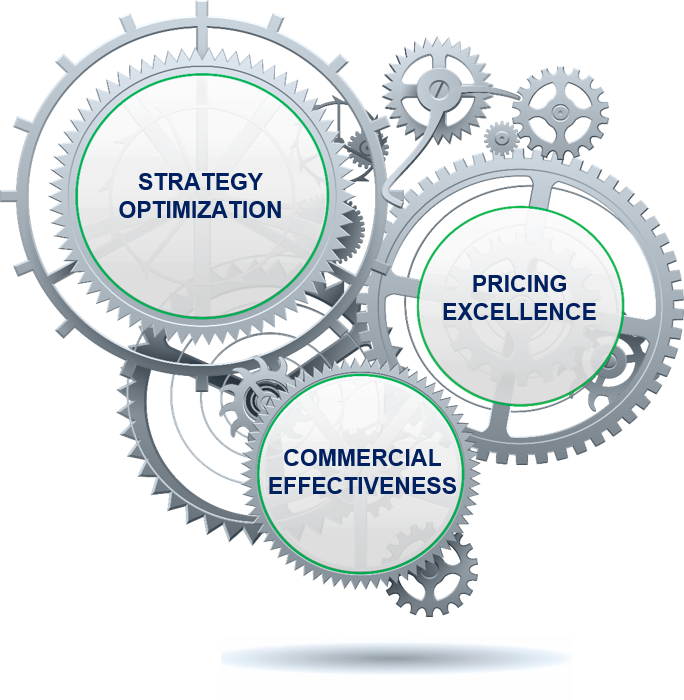
Successful Commercial Transformation requires alignment across three fundamental dimensions:
Strategy Optimization: Translating market opportunities and competitive positioning into clear commercial priorities.
Pricing Excellence: Establishing transparent, disciplined, and value-oriented pricing decisions that protect profitability.
Commercial Effectiveness: Enabling sales organizations to execute consistently, supported by appropriate processes, governance, and incentives.
These capabilities must operate as an integrated framework, supported by reliable data, advanced analytics, and connected commercial systems.
AI Powered solutions can accelerate this integration, improve decision-making, and reduce operational complexity.
But technology is an enabler, not the ultimate objective.
The objective is to develop an organization that can consistently make better commercial decisions without relying on permanent external intervention.
Why Capability Transfer Matters
Capability transfer should never be treated as a final training session or a documentation exercise at the end of a consulting engagement.
It needs to be embedded throughout the transformation journey.
That means involving internal teams in the development of methodologies, testing solutions against real business situations, and building the practical skills required for independent execution.
It also requires clear governance, defined responsibilities, accessible documentation, and ongoing coaching during implementation.
The strongest results emerge when employees understand not only what to do, but why decisions are made and how to adapt them as circumstances change.
This is what turns knowledge transfer into organizational capability.
The Ultimate Measure of Success
At Stratence Partners, we consider organizational autonomy a fundamental outcome of Commercial Transformation.
Our approach integrates Strategy Optimization, Pricing Excellence, Commercial Effectiveness, and pragmatic AI Powered capabilities with hands-on implementation, change management, and capability building.
The objective is not simply to deliver immediate improvements in commercial performance.
It is to ensure that organizations can sustain those improvements, adapt to future market conditions, and continuously strengthen their own capabilities.
Because ultimately, successful transformation is not measured by the sophistication of the solutions delivered or the duration of the engagement.
It is measured by the results organizations can achieve—and continue to improve—long after the consultants have left.
Stratence Partners
Commercial Transformation, AI Powered


Comments