
From Strategy to Sustainable Competitive Edge: Why Pricing Transformation Is Now a CEO Agenda

Introduction
On April 14–15, Stratence Partners will participate in the Asian Pricing Summit in Singapore, one of the key global forums where pricing, revenue management, and commercial leaders converge to address the next era of growth.
This year’s context is clear: pricing is no longer a functional lever. It has become a structural driver of performance, directly linked to strategy execution, margin governance, and decision speed.
In this environment, organizations are not struggling because they lack pricing tools. They struggle because strategy, pricing, and execution are disconnected.
Fernando Ventureira, CEO of Stratence Partners, will deliver the closing keynote on Day 1, addressing how companies can move from fragmented initiatives to a sustainable competitive edge through Commercial Transformation.
The Reality Behind Pricing Challenges
Across industries, the same structural issues appear repeatedly:
Margin erosion driven by uncontrolled discounting and lack of gross-to-net transparency
Misalignment between strategic intent and commercial execution in the field
Slow decision-making due to fragmented data and systems
AI initiatives disconnected from real commercial performance
These are not pricing problems.
They are operating model problems.
And they require a transformation approach — not isolated optimization.
From Pricing to Commercial Transformation
Stratence Partners approaches this challenge through a single integrated framework:
Commercial Transformation
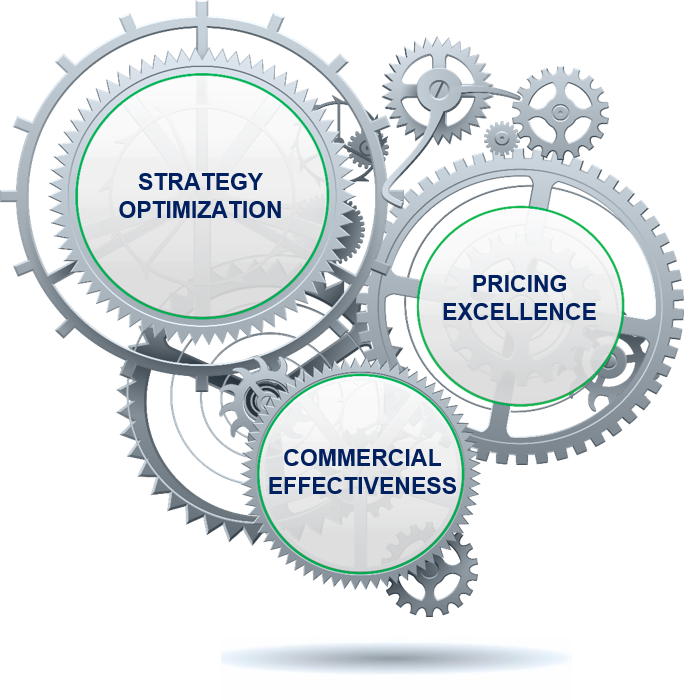
Strategy Optimization, Pricing Excellence and Commercial Effectiveness
AI-Powered data, systems and decision architecture
The objective is not to improve parts of the system, but to fix the full commercial framework — permanently.
This is where most organizations fail: they improve pricing models without changing governance, incentives, or execution discipline.
The result is predictable: limited impact and no sustainability.
Keynote Focus: From Strategy to Sustainable Competitive Edge
Fernando Ventureira’s keynote will focus on four structural pillars required to build sustainable performance:
Integrated Decision FrameworkAlign strategy, pricing economics, and market execution into one coherent system.
Proven Transformation SequenceStart with transparency, focus on implementation, and scale impact in a structured way.
Governed Best Practices at ScaleEmbed data, intelligence, and execution discipline through governance — not guidelines.
Sustained Performance by DesignEnsure measurable ROI, clear ownership, adoption, and long-term autonomy.
These pillars reflect a core principle:
Competitive advantage is not created by analysis alone — but by disciplined execution at scale.
Why This Matters Now
The Asian market context adds an additional layer of complexity:
High competitive intensity and price sensitivity
Rapid digital adoption and AI acceleration
Increasing pressure on margins due to global dynamics
In this environment, companies that rely on fragmented pricing initiatives will continue to underperform.
Those that build an integrated Commercial Transformation model will gain speed, control, and measurable advantage.
Stratence Partners Perspective
Stratence Partners supports CEOs and executive teams in redesigning their commercial operating model, combining:
Strategy Optimization
Pricing Excellence
Commercial Effectiveness
AI-Powered data and systems
The focus is always the same: measurable impact, rapid execution, and long-term autonomy.
This is not about improving pricing.
It is about transforming how the organization decides, prices, and executes.
Conclusion
The conversation in Singapore will not be about trends.
It will be about execution.
Because in today’s environment, competitive advantage is not defined by strategy alone; but by the ability to translate it into consistent, disciplined performance across the organization.
Connect with Stratence Partners: F.Ventureira@Stratence.Partners


Comments