
Utilities Commercial Transformation: Connecting Strategy, Pricing and Execution

Utilities are navigating a fundamental transformation of their commercial environment.
Energy transition, regulatory pressure, changing demand patterns, decentralization, new technologies and increasingly sophisticated customers are reshaping how value is created and captured.
Yet the commercial challenge goes beyond responding to external change.
Significant performance can also be lost internally when Strategy, Pricing and Commercial Execution operate independently, commercial data remains fragmented, decision-making is slow, and customer-facing teams lack clear governance and execution frameworks.
For Utilities leaders, the broader opportunity is Commercial Transformation.
From market complexity to an integrated commercial system
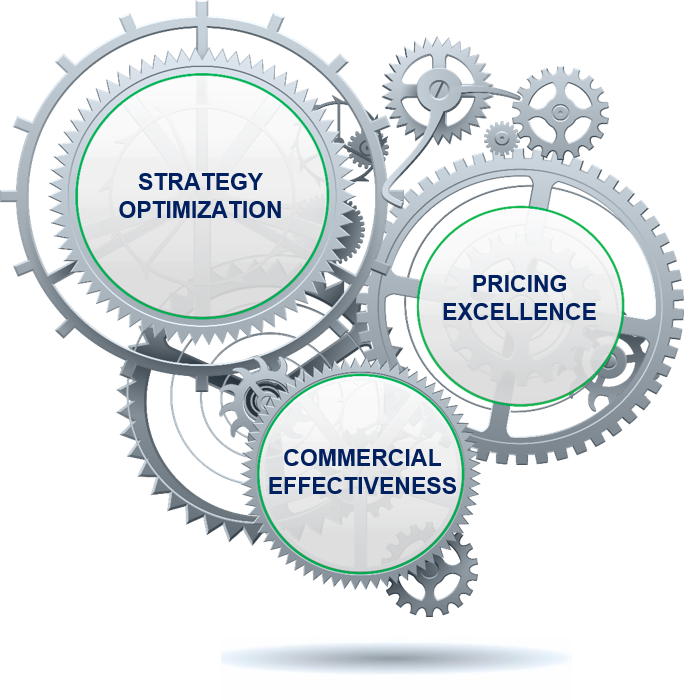
Commercial performance depends on connecting three fundamental capabilities.
Strategy determines where to compete, which customer and market segments to prioritize, how propositions should evolve and where profitable growth opportunities exist.
Pricing translates those choices into tariffs, contracts, commercial conditions, value capture and disciplined margin governance.
Commercial Execution ensures that strategy and pricing are consistently reflected in customer acquisition, retention, account management, negotiation and day-to-day commercial decisions.
When these capabilities operate independently, Utilities can face fragmented customer strategies, margin leakage, inconsistent commercial conditions, slow responses to market changes and limited visibility into true customer and contract profitability.
The objective is therefore not simply to optimize individual functions.
It is to make the commercial organization operate as one integrated system.
Where Stratence focuses in Utilities
Stratence Partners supports Utilities organizations through an end-to-end Commercial Transformation framework across Strategy, Pricing and Commercial Execution.
Typical priorities include:
Market and customer segmentation
Portfolio and value proposition optimization
Customer and contract profitability
Pricing and margin governance
Tariff and commercial conditions optimization
Cost-to-serve transparency
Customer acquisition, retention and value management
Contracting and negotiation governance
Sales and key account effectiveness
Commercial policies, roles and incentives
Scenario simulation and commercial forecasting
Commercial data integration and decision support
The objective is not to produce another set of recommendations.
It is to implement the capabilities, processes, governance, analytics and systems required to translate commercial strategy into measurable execution.
Pragmatic AI applied to Utilities commercial decisions
AI should not become a separate transformation agenda.
Its value comes from improving specific commercial decisions.
Within the Stratence approach, pragmatic AI can support areas such as customer segmentation, profitability analysis, demand and commercial scenario simulation, pricing decisions, account prioritization, forecasting and commercial decision support.
SPIE+AI™, the Stratence Partners Integrated Ecosystem, brings together Data Management, Data Science and Commercial Excellence within one coherent and auditable framework.
The purpose is practical: create greater transparency, accelerate decision-making, strengthen execution discipline and provide management with better commercial control.
Implementation determines whether transformation delivers value
Commercial Transformation only creates sustainable impact when new capabilities become embedded in how the organization operates.
Stratence therefore combines senior international expertise, codified commercial best practices, hands-on implementation, change management and capability transfer.
Ready-to-deploy solutions accelerate implementation, while training and coaching help secure full adoption and future autonomy.
With 25+ years of experience and more than 400 projects, Stratence supports international organizations in translating Commercial Transformation into measurable improvements in profitability, market performance, decision speed and execution quality.
For Utilities executives, the strategic question is therefore not simply:
“Where can we improve Pricing, Sales or Data?”
It is:
“Are Strategy, Pricing and Commercial Execution working together as one system to maximize Profit and Market Share?”


Comments