
Pharma's Margin Squeeze: Why Pricing Pressure Is Exposing Structural Weaknesses in Commercial Operating Models
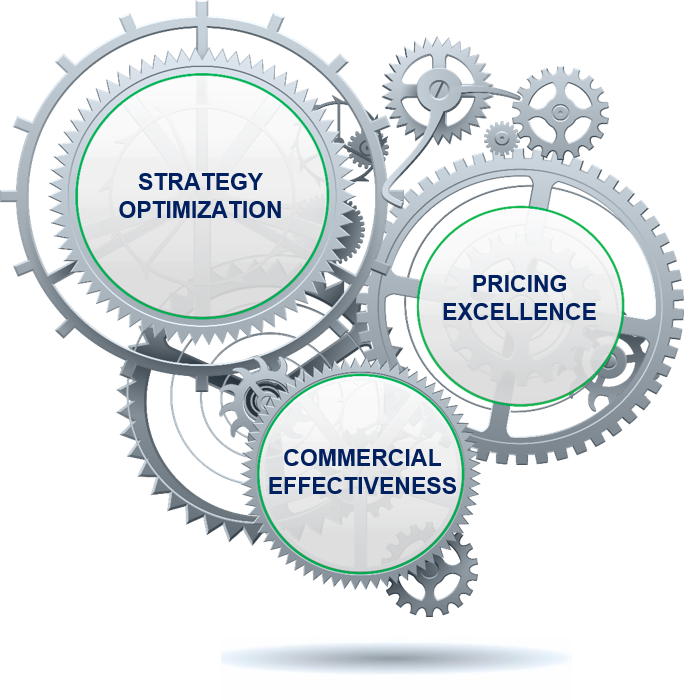

Increasing reimbursement pressure is not creating new problems. It is revealing existing weaknesses in decision architecture, Pricing Governance, gross-to-net control, and commercial execution.
Introduction
The pharmaceutical industry is entering a period of sustained margin pressure.
Governments continue increasing scrutiny on healthcare spending. Health Technology Assessment requirements are evolving. Reimbursement negotiations are becoming more demanding. Pricing pressure is intensifying across both mature and emerging markets.
Most organizations recognize these external challenges.
Far fewer recognize what they are exposing internally.
The issue is not simply pricing.
It is the ability of the commercial operating model to absorb pressure while maintaining profitable growth.
Pricing pressure is not creating new weaknesses.
It is revealing existing ones.
As commercial complexity increases, organizations are discovering that profitability depends less on individual pricing decisions and more on the quality of the system governing those decisions.
What Is Really Happening
Many pharmaceutical organizations still manage Strategy, Pricing, Market Access, Commercial Execution, and Finance as largely independent activities.
Global teams define strategy.
Regional teams manage pricing and reimbursement.
Market Access teams focus on securing access and coverage.
Commercial teams execute in the market.
Each function performs valuable work.
The challenge is that they frequently operate with different priorities, different data, and different decision-making processes.
The consequence is predictable.
Commercial decisions become fragmented.
Gross-to-net visibility deteriorates.
Pricing Governance weakens.
Execution quality varies between affiliates.
Strategic intent becomes diluted before reaching the field.
In many organizations, Pricing is recognized as important but is not fully empowered within the decision-making process.
As market complexity increases, the absence of clear Pricing Governance creates inconsistent decisions, slower execution, and reduced visibility on the true drivers of profitability.
The challenge is not simply defining better prices.
It is establishing a governance framework that aligns Strategy, Pricing, Market Access, Commercial, and Finance around a common decision architecture.
What appears to be a pricing issue is often a commercial operating model issue.
This distinction matters because solving the wrong problem rarely improves performance.
Business Impact
Across more than 800 projects and multiple industries, Stratence Partners consistently observes that organizations lose between 4% and 12% of EBIT annually due to structural commercial weaknesses.
These losses rarely originate from a single decision.
They accumulate through:
Uncontrolled discounting
Gross-to-net opacity
Fragmented governance
Misaligned incentives
Inconsistent field execution
Slow commercial decision-making
The result is margin leakage that remains largely invisible until market pressure intensifies.
This is precisely what many pharmaceutical companies are experiencing today.
Pricing pressure is accelerating faster than commercial operating models can adapt.
Organizations that fail to address these structural weaknesses often discover that every additional pricing concession, rebate, or contracting complexity further reduces transparency and control.
Pricing Governance as a Strategic Capability
Leading pharmaceutical organizations increasingly recognize that Pricing Governance is not a pricing function.
It is a business capability.
Effective Pricing Governance creates the mechanisms through which commercial decisions remain consistent across products, markets, affiliates, reimbursement environments, and stages of the product lifecycle.
Its objective is not control.
Its objective is better decisions.
When supported by trusted data, clear accountability, defined decision rights, and cross-functional alignment, Pricing Governance improves:
Gross-to-net transparency
Decision quality
Approval speed
Commercial consistency
Margin protection
Value realization
In this context, Pricing Governance becomes a critical component of Commercial Transformation rather than an isolated pricing initiative.
The organizations making the greatest progress are treating governance as a decision system that improves consistency, transparency, speed, and business performance.
What Needs to Change
The organizations outperforming under today's conditions are approaching the challenge differently.
Rather than optimizing isolated functions, they are redesigning how commercial decisions are made.
This is Commercial Transformation.
Not as a project.
Not as a consulting initiative.
As an operating capability.
Three elements are becoming increasingly important.
Decision Architecture
Clear governance regarding who makes decisions, using which data, under which authority.
Decision rights must be explicit rather than assumed.
Gross-to-Net Transparency
Organizations require visibility beyond list prices.
They need complete understanding of rebates, discounts, tenders, contracting structures, and true net profitability.
Execution Discipline
Strategy only creates value when execution follows the same logic.
Incentives, negotiation authority, pricing corridors, and field behavior must reinforce strategic objectives rather than undermine them.
When these three capabilities operate together, commercial performance becomes more predictable, scalable, and controllable.
The Role of Data, Systems, and AI Powered Enablement
Many organizations continue investing heavily in analytics and AI initiatives.
Yet commercial decisions often remain unchanged.
The reason is simple.
Technology alone does not improve commercial performance.
It must be embedded inside the operating model.
At Stratence Partners, Data Management, Data Science, and Integrated Commercial Systems support Commercial Transformation rather than replace it.
Through SPIE+AI™, organizations can:
Establish a Single Point of Truth (SPOT™)
Improve gross-to-net transparency
Strengthen Pricing Governance
Accelerate decision-making
Improve commercial execution discipline
Support strategic and operational alignment
AI Powered capabilities become valuable when they support governance, economics, and execution.
Not when they operate in isolation.
Case Example
Situation
A global pharmaceutical organization faced increasing pricing pressure across more than 50 markets while experiencing declining margin performance despite strong product demand.
Gross-to-net visibility was fragmented.
Pricing decisions varied significantly between affiliates.
Market Access and Commercial teams operated under different priorities.
Governance structures were not sufficiently supporting decision consistency.
Intervention
The organization implemented a Commercial Transformation program focused on:
Pricing Governance redesign
Decision architecture clarification
Gross-to-net transparency
Market Access alignment
Commercial effectiveness
AI Powered commercial decision support
Strategy, Pricing, Market Access, and Execution were aligned within a single commercial framework.
Measurable Impact
Within the first year:
Improved net price realization
Reduced margin leakage
Greater pricing consistency across affiliates
Faster commercial decision-making
Stronger governance discipline
Better alignment between Pricing, Market Access, and Commercial teams
Results aligned with typical Stratence outcomes, including 2% to 6% EBIT improvement during the first year and measurable gains in profitability, transparency, and execution quality.
Conclusion
Pharmaceutical organizations will continue facing increasing pricing pressure.
That reality is unlikely to change.
The critical question is whether commercial operating models are equipped to perform under those conditions.
The organizations creating sustainable advantage will not necessarily be those with the most sophisticated pricing models.
They will be those with the strongest Pricing Governance, the clearest decision architecture, and the ability to consistently align Strategy, Pricing, Market Access, and Execution across the entire commercial system.
Because under sustained market pressure, profitability is no longer determined by pricing alone.
It is determined by the quality of the commercial operating model.
Is your organization managing pricing pressure... or is pricing pressure exposing weaknesses in your commercial system?


Comments