
SPIE in Chemicals: Turning Volatility into Disciplined Commercial Execution
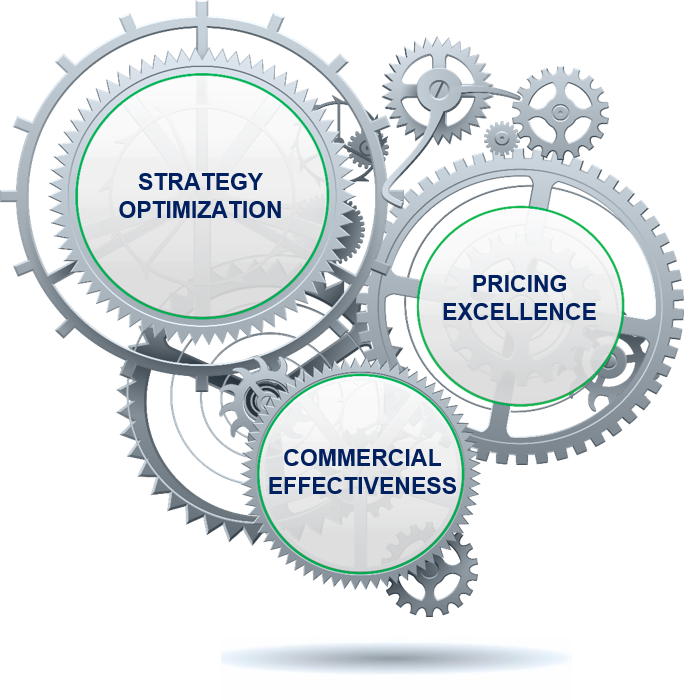

SPIE -the Stratence Partners Integrated Ecosystem- is designed to restore commercial control in complex, volatile environments. In the chemical industry, where margin pressure, cost volatility and execution fragmentation are structural, SPIE provides a unified, auditable framework connecting strategy, pricing governance and commercial execution.
The chemical industry is operating in one of the most structurally demanding commercial environments of the last decades. Energy volatility, raw material cost pressure, regulatory constraints, regional demand fragmentation and increasingly sophisticated customers are no longer temporary disruptions – they are the new baseline.
In this context, many chemical organizations are still trying to protect margins through tactical actions: periodic price increases, stricter discount controls, or isolated system upgrades. While necessary, these measures are rarely sufficient. The real challenge is not volatility itself, but the lack of structural commercial control to absorb it.
Why SPIE matters for Chemicals
Across chemical value chains – from basic chemicals to specialties – we repeatedly observe the same structural weaknesses:
Limited gross-to-net transparency across products, customers and channels• Pricing decisions disconnected from real execution in the field
Fragmented governance between strategy, pricing and sales
Heavy data environments that slow down decision-making instead of enabling it
As a result, volatility translates directly into margin leakage. Discounts proliferate, exceptions become the norm, and commercial teams compensate uncertainty with price concessions rather than value-based decisions.
SPIE as the backbone of Commercial Transformation
True resilience in Chemicals does not come from reacting faster, but from structurally redesigning how commercial decisions are made and executed.
Commercial Transformation addresses the full framework:
How strategy defines where and how to compete
How pricing governance translates strategy into disciplined margin rules
How sales execution operates within clear, enforceable corridors
When these three dimensions work as one system, volatility becomes manageable. Decisions accelerate, negotiations gain authority, and profitability becomes auditable instead of debated.
SPIE: From fragmented data to executive-grade intelligence
Chemical organizations are typically data-rich but insight-poor. ERP, CRM, CPQ and pricing tools coexist without a unified commercial logic. The consequence is slow scenario analysis, limited forward-looking visibility and inconsistent execution across regions.
An AI‑Powered commercial ecosystem only delivers value when it serves a clear transformation objective:
One single point of truth for customers, products and deals
Full gross-to-net transparency across dimensions
Strategic corridors that guide sales execution in real time
AI is not the strategy. It is the accelerator that allows strategy, pricing and execution to operate as a coherent system at scale.
What leading chemical players do differently
Organizations that outperform in volatile environments share common characteristics:
They embed pricing governance into daily commercial execution
They equip sales teams with clear deal boundaries, not just targets
They align incentives with profitability, not only volume
They invest in capability transfer to secure long-term autonomy
The outcome is not only margin protection, but faster time-to-decision, higher execution discipline and sustained competitive advantage.
SPIE turning volatility into commercial advantage
Volatility will remain a constant in the chemical industry. The differentiator will be the ability to absorb it structurally rather than firefighting it tactically.
Commercial Transformation, AI‑Powered, allows chemical organizations to move from margin erosion to margin control – and from reactive pricing to disciplined, value-driven execution.
Call to discussion in LinkedIn
This article continues the conversation on LinkedIn. Join the discussion here: https://www.linkedin.com/feed/update/urn:li:activity:7422269905070174208


Comments