
Transformation Does Not End with the Recommendation
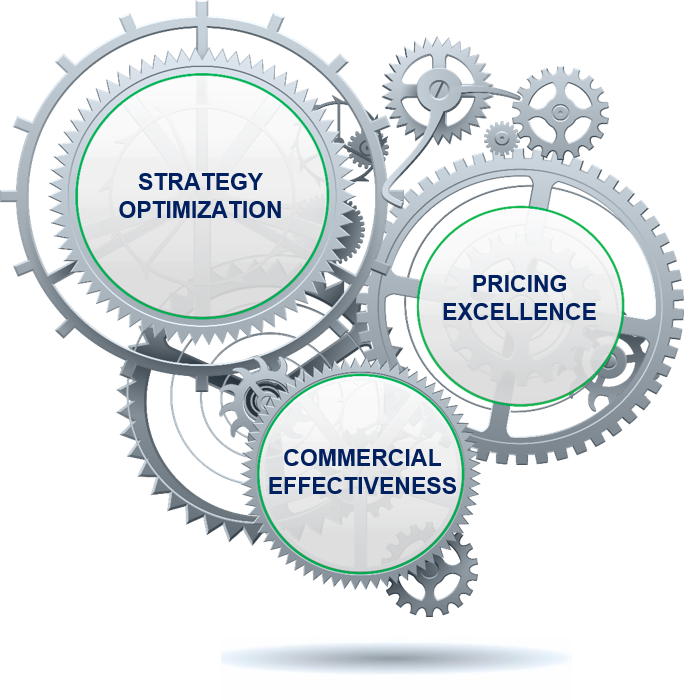

Real Commercial Transformation begins when strategy becomes the way the organization actually operates.
A strategy can be brilliant.
A diagnostic can identify millions in opportunity.
A roadmap can clearly define what needs to change.
And still, twelve months later, very little may have changed in the business.
That is one of the most persistent challenges in transformation.
Knowing what should happen is not the same as making it happen.
The difference between recommendation and impact lies in execution.
And execution is where Commercial Transformation becomes real.
The recommendation is only the beginning
Consulting has traditionally been associated with analysis, recommendations and strategic roadmaps.
Those elements remain essential.
Organizations need to understand where value is being lost, what capabilities are missing and which priorities will create the greatest impact.
But a recommendation, however sophisticated, does not change customer behavior.
It does not improve a negotiation.
It does not correct a pricing decision.
It does not redesign incentives.
It does not create better governance.
And it does not automatically change the way people make decisions every day.
The organization has to absorb the transformation.
That requires moving beyond the answer and into the operating model.
From strategy to execution
Commercial Transformation becomes sustainable when strategic intent is translated into the mechanisms that govern everyday commercial decisions.
That means connecting strategy with:
Processes.How decisions are made and executed.
Governance.Who owns those decisions, which rules apply and where authority sits.
Organization.Whether roles, responsibilities and incentives support the desired behavior.
Capabilities.Whether teams have the skills, tools and business understanding required to execute consistently.
Data and systems.Whether decision-makers have reliable information at the moment they need it.
Commercial execution.Whether the strategy ultimately changes what happens with customers, products, pricing, negotiations and opportunities in the market.
A transformation that does not reach those dimensions remains largely theoretical.
Implementation changes the nature of the work
Once transformation moves into execution, the challenge changes.
The question is no longer simply:
“What should we do?”
It becomes:
“How do we make this work across the real organization?”
That means dealing with existing systems, established processes, local market realities, organizational resistance, different levels of capability and competing priorities.
It requires working across functions.
It requires sequencing.
It requires governance.
And it requires the discipline to move from a future-state concept into something people can actually use.
At Stratence Partners, this is why we approach Commercial Transformation as an end-to-end journey, not as an isolated strategic exercise.
The work must move from diagnosis and design through implementation, capability building and scaling.
Capability transfer is part of the transformation
There is another important distinction.
A successful transformation should not create permanent dependency on external advisors.
Quite the opposite.
The organization should become stronger because of the transformation.
That means transferring methodologies, decision frameworks, tools and capabilities into the business.
Teams need to understand not only what has changed, but also:
why it changed,
how decisions should now be made,
which information matters,
which governance principles apply,
and how the organization should continue improving after the initial transformation program is complete.
That is where training, coaching and capability building become strategic rather than secondary.
The objective is autonomy.
Systems and AI must reinforce the operating model
Technology can significantly accelerate this process.
Data integration can improve transparency.
Analytics can strengthen decision-making.
Automation can remove friction.
AI can support scenario modeling, accelerate analysis, identify patterns and help commercial teams operate with greater speed and precision.
But technology should reinforce the commercial model—not become a transformation agenda disconnected from it.
At Stratence Partners, AI Powered capabilities are embedded within the broader Commercial Transformation framework, supporting Strategy, Pricing, Commercial Effectiveness, Data Management, Data Science and Integrated Commercial Systems.
The technology matters.
But the operating model determines whether that technology creates sustainable value.
Transformation becomes successful when it becomes normal
The ultimate sign of a successful transformation is not the final presentation.
It is when the new way of working stops feeling like a transformation program.
When the governance is embedded.
When the processes are followed.
When teams make better decisions naturally.
When systems provide the right information.
When managers reinforce the right behaviors.
When capabilities remain inside the organization.
And when performance continues improving without the transformation team having to push every decision forward.
That is when transformation becomes part of the business.
And that is why, at Stratence Partners, transformation does not end with the recommendation.
It ends when the organization can execute the change itself.
Stratence PartnersCommercial Transformation, AI Powered
A Collaborating Firm of Andersen Consulting
Comments