
Transport & Logistics: From Operational Complexity to Commercial Control

INTRO
Transport & Logistics has become one of the most operationally complex industries globally.
But complexity is not the core issue.
The real challenge lies in the inability to translate that complexity into structured, disciplined commercial decisions.
Most organizations are still operating with fragmented pricing logic, disconnected systems, and reactive execution models.
And that is where value is lost.
THE STRUCTURAL PROBLEM
Across the industry, the same patterns repeat:
Lack of gross-to-net transparency across customers, routes, and contracts
Pricing decisions driven by urgency rather than structured governance
Contracts that fail to adapt to volatility (fuel, capacity, demand shifts)
Disconnected systems (ERP, CRM, pricing tools) limiting decision speed
This creates a structural erosion of margins that is often invisible until it is too late.
WHY TRADITIONAL APPROACHES FAIL
Most initiatives focus on isolated improvements:
Adjusting pricing models
Renegotiating contracts
Implementing new tools
But these actions fail because they do not address the full commercial framework.
Strategy, pricing, and execution remain disconnected.
And without integration, performance cannot scale.
THE STRATENCE APPROACH
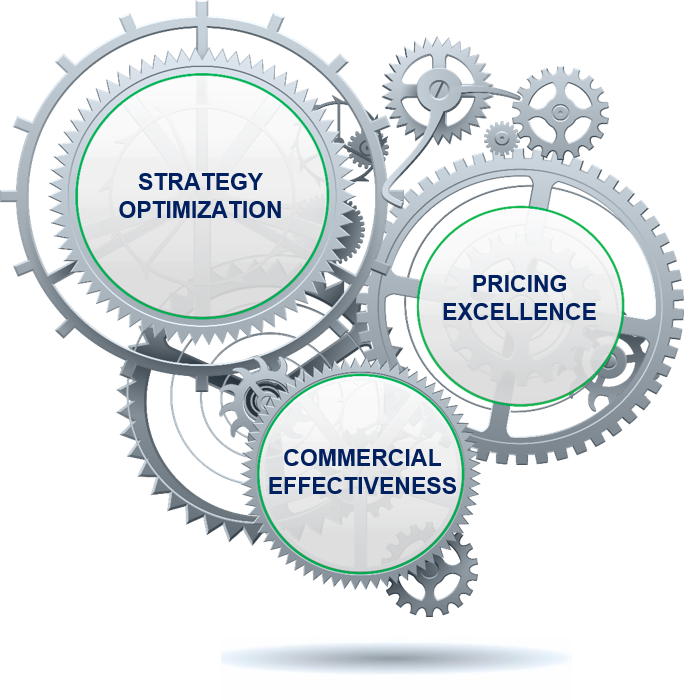
Stratence Partners addresses this through Commercial Transformation.
Not as a concept — but as an operating model.
We redesign how organizations:
Define strategy (where to play and how to win)
Structure pricing (margin governance and value capture)
Execute commercially (sales discipline and contracting)
All supported by AI-Powered systems that enable:
Single Point of Truth for commercial data
Gross-to-net transparency at transaction level
Real-time decision support for pricing and deals
This integrated approach allows organizations to move from reactive operations to controlled, measurable performance.
IMPACT
Typical outcomes include:
+4% to 12% margin improvement
+8% to 25% growth in volume and market share
Significant increase in decision speed and execution consistency
More importantly, organizations gain autonomy.
They stop reacting.They start controlling.
CONCLUSION
Transport & Logistics will not become less complex.
But complexity does not have to mean uncertainty.
The organizations that win will be those that structure their commercial decisions with discipline, transparency, and speed.
This is not about pricing.


Comments