
Commercial Transformation in Action. Strategic Insights from the 9th Pricing & Revenue Management Summit – Berlin 2026
Key Insights from the 9th Pricing & Revenue Management Summit – Berlin 2026
The 9th Pricing & Revenue Management Summit, held on 12–13 March 2026 in Berlin, brought together senior leaders from global organizations including PepsiCo, DHL, Yara, Decathlon, Swarovski, NS, Cargill and others to explore how pricing, revenue management and commercial strategy must evolve in a world defined by volatility, margin pressure and accelerating technological change.
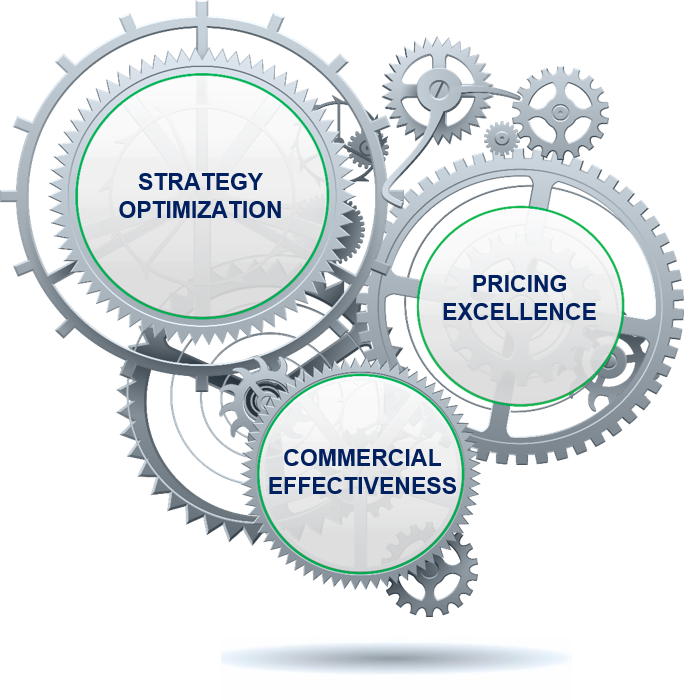
Across two days of executive sessions, case studies and strategic discussions, one message clearly emerged: pricing can no longer operate as an isolated capability. Leading organizations are embedding pricing within a broader commercial transformation framework that connects strategy, pricing economics and sales execution.
For Stratence Partners, the event represented an opportunity to contribute to this strategic discussion and share practical perspectives on how organizations can structure commercial decision systems capable of delivering measurable and sustainable performance.
Two Types of Enterprises in a Volatile Market
During his keynote session, Fernando Ventureira, CEO of Stratence Partners, framed the discussion with a simple but powerful idea.
There are two types of enterprises:
Those that complain about volatility.
And those that adapt their commercial systems to manage it.
Those enterprises that adapt their commercial systems are the ones that ultimately emerge stronger.
In today’s environment of margin pressure, market volatility and increasing competitive intensity, organizations that continue to treat strategy, pricing and sales execution as separate domains struggle to sustain performance. By contrast, companies that integrate these elements into a single decision architecture are better equipped to respond to market dynamics and protect profitability.
From Pricing Tools to an Integrated Commercial Engine
Fernando’s presentation emphasized a central principle of Commercial Transformation: sustainable performance requires an integrated commercial engine where strategy, pricing economics and execution operate as one coordinated decision system.
Leading organizations are evolving toward a structured model that includes:
An integrated decision framework connecting strategy, pricing economics and market execution
Early transparency into commercial performance drivers
Structured data foundations enabling intelligent decision-making
Governance mechanisms that ensure disciplined execution in the field
A key element of this transformation is achieving full visibility across the Gross-to-Net waterfall, allowing companies to move from simply suffering margin leakages to actively engineering pricing and commercial levers in line with strategic objectives.
When organizations establish this level of transparency and governance, pricing evolves from a tactical activity into a strategic capability that shapes both market share and profitability.
From Data to Commercial Intelligence
Another central theme was the role of commercial data architecture and AI Powered analytics in enabling scalable Commercial Transformation.
Many companies possess large volumes of commercial data but lack the structured systems required to convert that information into confident decision-making.
Leading organizations are therefore investing in commercial data models that integrate information from ERP systems, CRM platforms, market intelligence sources and operational inputs. Once aligned within a unified commercial model, these data structures enable organizations to generate predictive insights and guide pricing, portfolio and account decisions.
The objective is not simply better analytics but greater decision confidence across the organization.
Panel Discussion: Pricing as a Structural Lever of Commercial Transformation
Later in the afternoon, Eduardo Kühnel, Senior Vice President at Stratence Partners, moderated a panel discussion focused on how pricing can be embedded as a structural lever within broader Commercial Transformation programs.
The discussion brought together senior executives from global organizations:
Name | Position | Company |
Katrin Wibmer | Head of B2B Pricing | Swarovski |
Joris Roosen | VP Business Excellence & Customer Experience | Yara International |
Graeme Aitken | Vice President Strategic Customer Pricing | DHL Express |
The panel explored a number of practical questions facing organizations today.
Why do margins continue to erode even when companies invest heavily in pricing tools?
What organizational barriers prevent strategy, pricing and sales from operating as a unified system?
How can organizations create gross‑to‑net transparency without overwhelming the business with complexity?
And
how can AI be integrated into pricing and commercial decisions without reducing managerial accountability?
Across industries, panelists highlighted a common challenge: aligning data, governance, commercial processes and organizational capabilities into a coherent commercial operating model capable of sustaining performance over time.
A Strong Industry Dialogue
Beyond the formal sessions, the summit provided an excellent platform for dialogue with strategic, pricing and commercial leaders across multiple industries.
Discussions ranged from the application of AI in pricing decisions to the organizational challenges of implementing revenue management capabilities at scale.
What became clear throughout the event is that pricing excellence alone is no longer sufficient. Organizations must develop the structural capabilities required to align strategy, pricing and commercial execution into one integrated system.
Stratence Partners at the Center of the Discussion
Stratence Partners was strongly represented at the summit by:
Fernando Ventureira – CEO
Eduardo Kühnel – Senior Vice President
Greg Varner – Senior Vice President
Martin Verebes – Senior Vice President
Their participation reinforced Stratence Partners’ positioning around Commercial Transformation, AI Powered, helping organizations move beyond isolated pricing initiatives toward structured commercial decision systems capable of delivering measurable and sustainable P&L impact.
The Strategic Direction for Commercial Leaders
As markets become more volatile and competitive dynamics intensify, the companies that will succeed are those that treat pricing not as a tool, but as part of a broader commercial architecture.
The conversations in Berlin confirmed that the future of pricing lies in its integration with strategy, execution and intelligent data systems.
Organizations that build this integrated capability will not simply react to volatility; They will use it as a source of competitive advantage.


Comments