
Pharma at a Crossroads: Why Commercial Transformation Is Now a CEO Priority
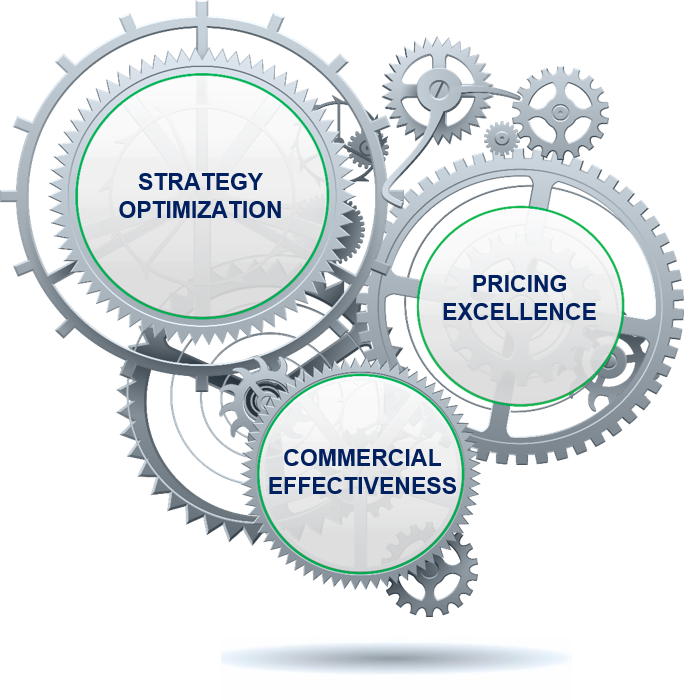

Pharma is no longer facing a pricing problem. It is facing a commercial system problem.
For years, pharmaceutical companies have addressed performance challenges through isolated initiatives: pricing optimization, market access improvements, commercial excellence programs, or digital transformation projects.
Yet despite these efforts, a structural issue persists: commercial performance remains inconsistent, difficult to scale, and highly dependent on local execution.
At Stratence Partners, we see this pattern across global organizations: the problem is not strategy, not data, and not even execution in isolation.
The problem is the lack of an integrated Commercial Transformation model.
From Fragmentation to Integration
Pharma organizations typically operate with fragmented layers:
Strategy defined at global level
Pricing and Market Access managed regionally
Execution driven locally by affiliates
Each layer works... but not together.
The result:
Misalignment between value strategy and pricing decisions
Limited visibility on true profitability (gross-to-net)
Slow and uncertain decision-making
Execution that diverges from strategic intent
This is not a marginal inefficiency.
It is a systemic erosion of EBIT and growth potential.
Commercial Transformation as an Operating Model
Leading pharma organizations are shifting their mindset.
They are no longer optimizing isolated functions.
They are redesigning how decisions are made across the entire commercial system.
This is what we define as Commercial Transformation, AI Powered: an integrated approach where Strategy, Pricing, and Execution operate as one unified framework.
At its core, this transformation focuses on three pillars:
Decision Architecture Clear governance on who decides what, based on which data, and at what level
Gross-to-Net Transparency Full visibility on pricing, discounts, rebates, and real profitability across markets
Execution Discipline Alignment between strategy, incentives, and field behavior
The Role of AI: From Noise to Intelligence
Pharma companies are investing heavily in data and AI. But most initiatives remain disconnected from daily decision-making.
At Stratence Partners, we take a different approach: AI is not an objective. It is an enabler of better, faster, and more consistent commercial decisions.
Through our AI-Powered integrated ecosystem, we:
Connect fragmented data into a Single Point of Truth
Translate analytics into pricing and commercial decisions
Embed intelligence into negotiation, access, and execution processes
The outcome is not more dashboards.
It is greater control over margin, growth, and execution quality.
From Programs to Permanent Capabilities
One of the biggest misconceptions in Pharma is treating transformation as a project.
Leading organizations understand that:sustainable impact comes from capability building, not temporary initiatives.
This means:
Embedding governance into daily routines
Aligning incentives with strategic objectives
Building internal autonomy through training and tools
Ensuring that every affiliate operates with the same logic and discipline
As a result, transformation becomes:
Self-funded
Scalable across markets
Sustainable over time
Case Reflection
Across multiple global pharma transformations, we observe a consistent pattern:
When organizations integrate Strategy, Pricing, and Execution into one system:
Decision speed increases significantly
Margin leakage is reduced structurally
Market Access and commercial alignment improves
Execution becomes consistent across affiliates
And most importantly:
performance becomes predictable and controllable.
Conclusion: A CEO-Level Shift
Pharma is entering a new phase.
Commercial performance is no longer a function-level responsibility. It is a CEO-level priority requiring a systemic approach.
The question is no longer: “Do we have the right strategy or pricing?”
The real question is: Do we have a commercial system capable of executing it consistently, globally, and at scale?
At Stratence Partners, we support pharmaceutical leaders in building that system — through Commercial Transformation, AI Powered, delivering measurable, scalable, and sustainable impact.


Comments