
Three executive takeaways from frankfurt 2026; What Has Changed in Pricing and Commercial Excellence?

Reflections from Fernando Ventureira following the B2B Pricing & Commercial Excellence Summit Europe 2026
The B2B Pricing & Commercial Excellence Summit Europe 2026 brought together pricing, commercial, strategy, and transformation leaders from across industries for two days of discussions in Frankfurt.
Having participated in Ardensi conferences for more than a decade, one observation stood out clearly:
The conversation around pricing continues to evolve.
What was once largely a pricing-focused discipline has become part of a much broader business agenda involving Commercial Transformation, strategy execution, commercial governance, AI enablement, and cross-functional decision-making.
Following the event, Fernando Ventureira, CEO of Stratence Partners, shared three observations that reflect where many organizations are heading today.
TAKEAWAY #1
Pricing Is Becoming Part of a Broader Commercial Transformation Agenda
One of the most noticeable evolutions is the profile of the participants attending these events.
Historically, pricing conferences were primarily attended by pricing professionals and commercial specialists.
Today, the audience increasingly includes leaders from:
Strategy
Sales
Marketing
Finance
Commercial Excellence
Business Transformation
This shift reflects a broader reality.
Pricing is no longer operating as an isolated capability.
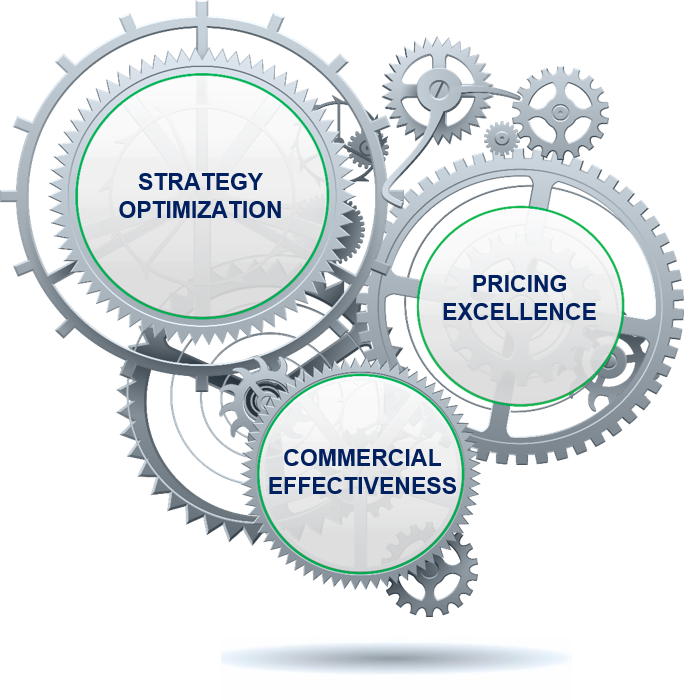
Organizations increasingly recognize that sustainable commercial performance requires strategy, pricing, governance, data, and execution to operate as one integrated framework.
This evolution is accelerating the move toward Commercial Transformation as a business capability rather than a collection of functional initiatives.
TAKEAWAY #2
Organizational Maturity Is Creating a New Generation of Challenges
Another important observation is the increasing maturity of organizations.
Many companies have already implemented significant improvements in pricing processes, analytics, governance, and digital capabilities.
However, greater maturity does not eliminate challenges.
It creates new ones.
Across discussions throughout the summit, several themes emerged repeatedly:
Geopolitical uncertainty
Market volatility
Increasing pricing complexity
AI integration and adoption
Faster decision-making requirements
Greater expectations around commercial execution
Organizations are no longer asking whether they should improve pricing.
They are asking how to improve decision quality, execution discipline, and commercial responsiveness in increasingly dynamic environments.
The conversation has shifted from capability creation to capability optimization.
TAKEAWAY #3
Cross-Industry Learning Is Becoming a Competitive Advantage
One of the most valuable aspects of events such as this is the opportunity to learn beyond one's own industry.
Many of the challenges discussed during the summit are no longer industry-specific.
Questions around pricing governance, commercial effectiveness, AI adoption, and execution discipline appear across pharmaceuticals & life sciences, chemicals, medical devices, energy & utilities, industrial manufacturing, and many other sectors.
The ability to identify best practices from different industries and adapt them intelligently is becoming a competitive advantage in itself.
Organizations that actively learn from broader market experiences often accelerate transformation while avoiding common implementation pitfalls.
This cross-industry perspective was one of the most valuable outcomes of the event.
CONCLUSION
The strongest message emerging from Frankfurt is not about pricing alone.
It is about integration.
As organizations continue to evolve, the ability to connect strategy, pricing, governance, AI enablement, and commercial execution into one coherent operating model will increasingly differentiate high-performing organizations from the rest.
Commercial Transformation is becoming less about individual initiatives and more about building sustainable organizational capabilities.
The conversations in Frankfurt confirmed that this journey is well underway.


Comments